Comparing Ceramic vs. Porcelain: Portland Tile Contractor Insights
- Travis Andersen

- Jan 13
- 4 min read
Tile selection is a crucial aspect of home renovation and remodeling, especially in a vibrant market like Portland. As homeowners seek to enhance the aesthetics and functionality of their spaces, the choice between ceramic and porcelain tiles becomes a significant consideration. Understanding the differences, benefits, and applications of these two materials can greatly influence your project outcomes. This article provides insights from a Portland tile contractor’s perspective, highlighting current trends in tile design for Portland homes.
Understanding Ceramic and Porcelain Tiles
Both ceramic and porcelain tiles are popular choices for flooring, walls, and backsplashes, yet they have distinct characteristics that set them apart.
Composition and Manufacturing Process
Ceramic tiles are made from clay that is baked at high temperatures, creating a hard surface. They are typically less dense and more porous than porcelain tiles, which are made from a finer clay and fired at higher temperatures. This difference in manufacturing results in porcelain tiles being less absorbent, making them ideal for areas prone to moisture.
Ceramic Tiles:
Made from red or white clay.
Baked at lower temperatures.
More porous, making them suitable for indoor use.
Porcelain Tiles:
Crafted from finer clay.
Fired at higher temperatures, resulting in a denser product.
Less porous and more durable, suitable for both indoor and outdoor applications.
Durability and Maintenance
When it comes to durability, porcelain tiles hold a significant advantage. Their denser structure makes them more resistant to scratches, chips, and stains, making them a preferred choice for high-traffic areas. Ceramic tiles, while still durable, are better suited for less demanding environments.
Maintenance Considerations:
Ceramic tiles require regular sealing to prevent moisture penetration.
Porcelain tiles are generally easier to maintain and can be cleaned with standard household cleaners.
Top Trends in Tile Design for Portland Homes
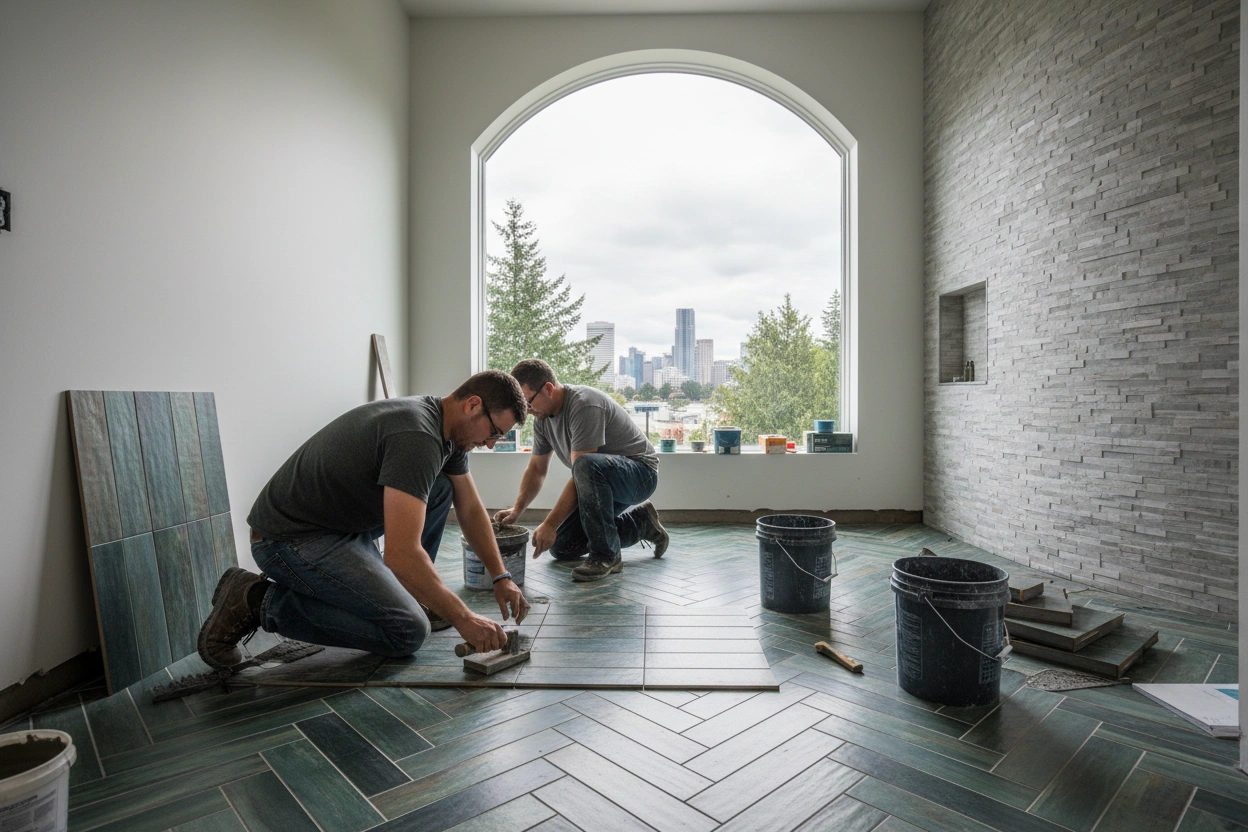
As the Portland design landscape evolves, several key trends are emerging in tile design that reflect the city's unique aesthetic and lifestyle preferences.
Natural Aesthetic and Texture
One of the prevailing trends is the emphasis on natural materials and textures. Homeowners are increasingly opting for tiles that mimic the look of natural stone or wood, providing a warm and inviting atmosphere. This trend aligns well with Portland's appreciation for nature and sustainability.
Popular Choices:
Wood-look porcelain tiles.
Natural stone-inspired ceramic tiles.
Bold Colors and Patterns
Another trend is the use of bold colors and patterns. Vibrant, geometric designs are becoming popular, allowing homeowners to express their personal style. This is particularly evident in kitchens and bathrooms, where statement tiles can serve as focal points.
Design Ideas:
Use patterned tiles as a backsplash.
Incorporate colorful tiles in shower designs.
Eco-Friendly Options
Sustainability is a key consideration for many Portland homeowners. Eco-friendly tiles made from recycled materials or sustainably sourced products are gaining traction. These options not only reduce environmental impact but also add a unique character to spaces.
Eco-Friendly Tile Features:
Recycled glass tiles.
Porcelain tiles made from sustainable materials.
Choosing the Right Tile for Your Project
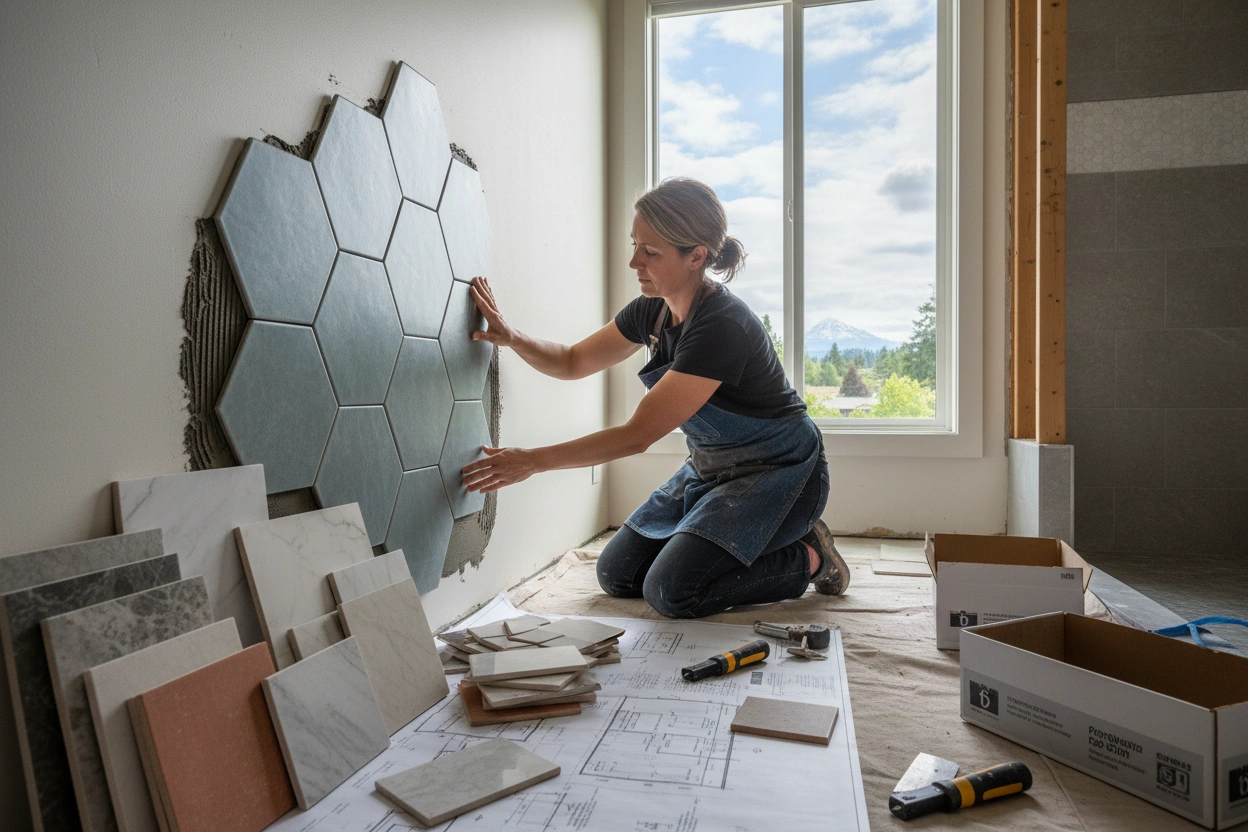
Selecting the appropriate tile requires careful consideration of various factors, including aesthetics, functionality, and budget. Here are some essential steps to guide homeowners through the decision-making process:
Assess the Space:
Determine the area where the tiles will be installed (e.g., kitchen, bathroom, outdoor).
Consider the amount of foot traffic and moisture exposure.
Define Your Style:
Identify the overall design theme you want to achieve.
Browse through tile galleries or visit local showrooms for inspiration.
Evaluate Budget and Cost:
Compare the costs of ceramic versus porcelain tiles.
Factor in installation costs, as porcelain tiles may require more specialized labor.
Common Misconceptions About Ceramic and Porcelain Tiles
Understanding the facts about ceramic and porcelain tiles can help homeowners make informed decisions and avoid common pitfalls.
Misconception: All Tiles are the Same
Many homeowners believe that all tiles serve the same purpose, but this is far from the truth. Each type of tile has its unique properties, making them suitable for different applications.
Misconception: Porcelain is Always More Expensive
While porcelain tiles can be pricier than ceramic tiles, it is essential to consider the long-term value. Porcelain's durability and low maintenance can result in cost savings over time.
Misconception: Ceramic Tiles Cannot be Used in Wet Areas
Although ceramic tiles are more porous, they can be used in wet areas when properly sealed. However, homeowners should consult with a Portland tile contractor to ensure the right materials and installation methods are employed.
Conclusion: Making Informed Decisions with PDX Home Revival
Navigating the choices between ceramic and porcelain tiles can be simplified with the right guidance. By understanding the differences in composition, durability, and maintenance, homeowners in the Portland metro area can make informed decisions that enhance their living spaces. The current trends in tile design emphasize natural aesthetics, bold patterns, and eco-friendly options, reflecting the unique character of Portland homes.
When considering a renovation or remodeling project, partnering with a knowledgeable Portland tile contractor can provide invaluable insights and expertise. PDX Home Revival is committed to helping homeowners select the perfect tiles that meet their aesthetic and functional needs.
For personalized guidance and professional installation, reach out to PDX Home Revival today. Contact PDX Home Revival to start your tile renovation journey and transform your space with confidence.


Comments